
19 May Protect Yourself from Fraud Scammers Pretending to Be Unison Bank
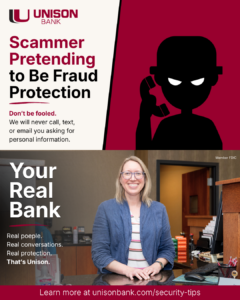
Unison Bank Warns Customers About Fraud Scams Impersonating Bank Fraud Departments
Phone scams and banking fraud attempts are becoming more sophisticated, and scammers are increasingly pretending to be representatives from trusted financial institutions like Unison Bank. These fraudsters often pose as members of a bank’s fraud department in an attempt to steal sensitive information or convince customers to move money.
Unison Bank is reminding customers to stay alert and understand the warning signs of these common banking scams.
How Fraud Scammers Pretending to Be Banks Operate
Many bank impersonation scams begin with a phone call, text message or email claiming there is suspicious activity on your account. In some cases, scammers can “spoof” phone numbers so the call appears to come from a legitimate bank phone number.
These scammers may sound professional and ask questions that make the interaction seem legitimate. They may reference recent purchases, banking terminology or common fraud concerns to gain your trust.
However, there is one major red flag customers should watch for: scammers almost always try to create urgency and pressure you into taking action involving your money.
Common Signs of a Bank Fraud Scam
Customers should be cautious if someone claiming to be from a bank:
Pressures you to act immediately
Asks you to transfer money to another account
Requests online banking credentials or secure access codes
Asks for debit card PINs or full card numbers
Requests payment through gift cards, cryptocurrency or wire transfers
Scammers rely on fear and urgency to prevent customers from slowing down and verifying the situation.
Unison Bank Will Never Ask for Sensitive Information Over the Phone
Unison Bank will never call customers and ask for:
Online banking passwords
Secure login verification codes
Debit card PIN numbers
Full card information
Money transfers for “safe keeping”
If you receive a suspicious phone call, text or email claiming to be from Unison Bank and something feels unusual, do not provide personal information or follow instructions from the caller.
What to Do If You Receive a Suspicious Call
If you do not recognize the number or suspect fraudulent activity:
Hang up immediately
Do not share sensitive banking information
Do not click suspicious links
Contact your local Unison Bank branch directly using a trusted phone number
Speaking directly with your local branch is the safest way to verify whether fraud concerns are legitimate.
Protect Yourself from Banking Fraud and Phone Scams
Fraud scams targeting bank customers continue to evolve, making awareness more important than ever. Staying cautious, slowing down and independently verifying suspicious communications can help protect your accounts and personal information.
Unison Bank encourages customers to remain vigilant and contact their local branch anytime they have concerns about suspicious calls, text messages or emails claiming to represent the bank.
For more information on how to keep yourself cyber-safe, please visit https://unisonbank.com/security-tips.
LEARN MORE: